Wabi Sabi Living Room Ideas
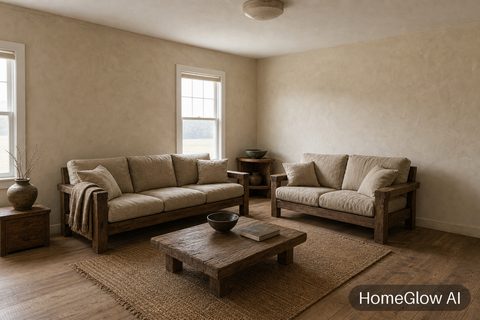
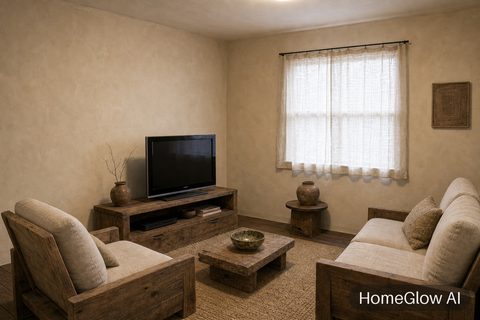
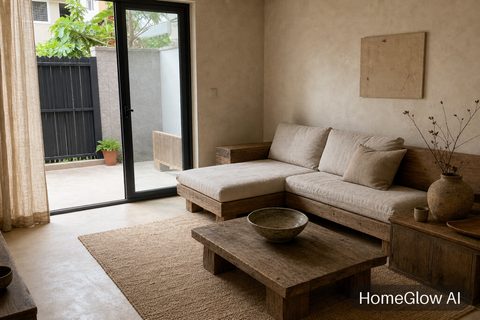
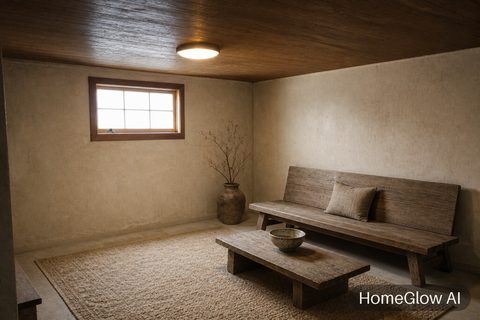
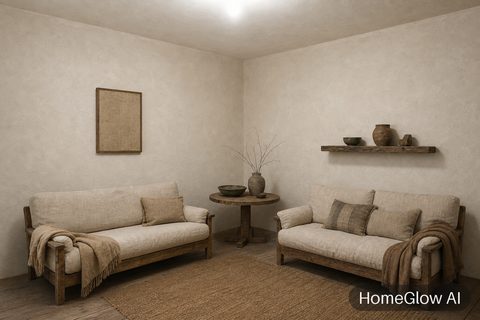
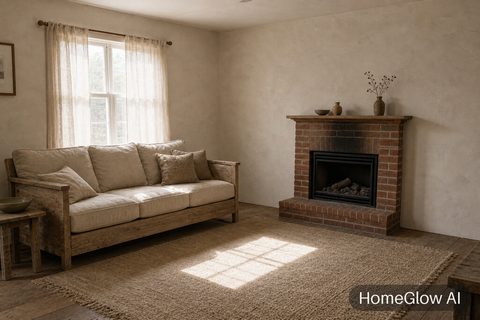
A wabi sabi living room pairs raw plaster, weathered wood and handmade ceramics with a palette of raw plaster tones and muted earth. Expect quiet, asymmetrical forms, lit by a floor lamp and layered ambient light. The room's own layout stays untouched.
How to get the look
- Anchor the palette in raw plaster tones and muted earth rather than a bright accent wall.
- Bring in raw plaster, weathered wood and handmade ceramics on the pieces the room already needs — a sofa, a coffee table, an area rug and a media console.
- Favor quiet, asymmetrical forms over anything boxy or ornate.
- Let a floor lamp and layered ambient light do the evening work instead of one central overhead fixture.
- Keep the seating layout and the sightline to the main window as the room's focal lines — the style changes finishes, not the layout.
- Stop short of pale oak, woven rattan and matte ceramic — that reads as japandi, a related but different look.
Wabi Sabi vs Japandi
Wabi Sabi and Japandi are often shortlisted together, and it is easy to see why: both favor restrained, uncluttered rooms over anything loud. The difference is in the materials. Wabi Sabi leans on raw plaster, weathered wood and handmade ceramics, built around quiet, asymmetrical forms; the palette stays close to raw plaster tones and muted earth. Japandi, by contrast, reaches for pale oak, woven rattan and matte ceramic and low platform forms, clean joinery and uncluttered surfaces, with a palette closer to warm neutral, soft charcoal and unbleached linen. If you are drawn to wabi sabi but keep pausing on reference photos that are actually japandi, the tell is usually the materials, not the layout — both styles are comfortable with an uncluttered floor plan, so the room you already have works for either. Try both on the same photo with HomeGlow before committing to paint or furniture, since the two can look closer in a single still photo than they do once the materials are in the room. Either choice keeps your existing floor plan, doors, and windows untouched — HomeGlow only changes the finishes and furnishings, never the architecture of the room you actually have.
Frequently asked questions
- Is this a real photo or a rendering?
- Every Wabi Sabi living room shown here started as a real photo submitted through the HomeGlow app. The walls, windows, and camera angle are kept exactly as photographed — only the design changes.
- How many Wabi Sabi living room designs are shown here?
- There are currently 6 published Wabi Sabi living room redesigns in this collection, each reviewed by a human moderator before it appears publicly.
- What defines Wabi Sabi style?
- Wabi Sabi on HomeGlow means raw plaster, weathered wood and handmade ceramics, in a palette of raw plaster tones and muted earth. Upload a photo of your own room and see it redesigned this way in under a minute, with your walls, windows, and layout kept exactly as they are.
- What changes in a living room redesign?
- A living room redesign on HomeGlow keeps a sofa, a coffee table, an area rug and a media console in place and restyles their finish to match the style you choose, with a floor lamp and layered ambient light carrying the look after dark. The room's own layout — the seating layout and the sightline to the main window — stays exactly as photographed.
- Can I try this on my own room?
- Yes — HomeGlow lets you photograph your own space and generate a similar redesign in under a minute, right on your iPhone.
See your own space like this
Point your camera at your real room and get a redesign in under a minute, right on your iPhone.
Try HomeGlow